I last wrote about the early stages of transition here. This is my long-delayed follow up.
I’ve worked in public policy my whole career. I believe in the power of understanding a problem and working out a solution to make the world a better place.
But over my 18 years of being a parent of a severely disabled son, Lachlan, my faith in the value of policies, rights and laws, has been sorely tested, as I’ve watched public bodies make an artform out of getting round legal duties.
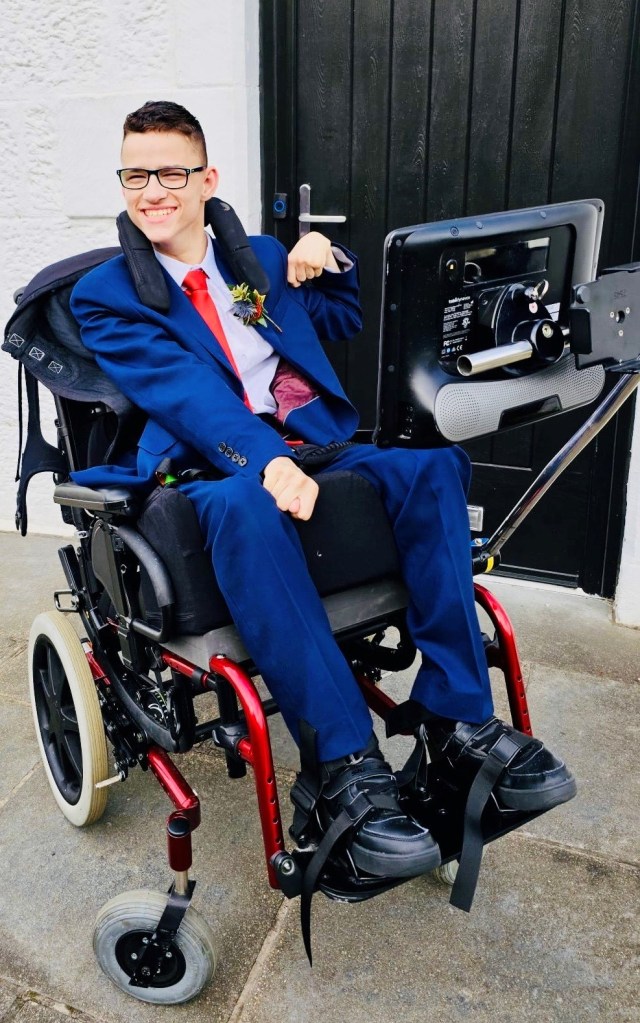
Most recently, our son, Lachlan, has left school and moved into adult services, encompassing changes to education, health, legal and financial aspects of life. While not unexpected, given the well-known problems with transition, our experience underlines the epic failure of public policy at play here. We sort-of know how to navigate the system, and it still broke us this year, impacting upon our own health and wellbeing.
the epic failure of public policy at play here
When friends and colleagues ask, it’s hard to sum up the experience in a short conversation. So, what follows is an overview on why we’re so badly letting down disabled young people and their families.
Leaving school is the most obvious impact many young people will notice once they approach adulthood, especially if routine matters to them.
If mainstream post-school education isn’t the right approach for a disabled young person, then their options are severely limited. If they also have significant physical disabilities, your options are almost non-existent in Scotland. None of the agencies with remits to support education or skills for young people could really help us, because the required services for Lachlan just don’t exist, and what’s left is shrinking due to funding constraints. In the end, after many meetings our local college found an option for him. Not ideal. But something for one day a week. And we know we’re lucky.
For many parents, all the resources and effort that goes into ensuring children and young people with disabilities have access to education from nursery to high school, feels like it’s pointless. Your potential ends at S6 in our world.
Again, the system isn’t designed for such inconvenience
Amongst the most critical, and dreaded, parts of the transition process is moving from children’s to adult’s social work services and a new assessment of need (more paperwork). Despite planning this for 2 years, our assessment still wasn’t concluded by the time Lachlan left school – for no other reason than poor planning from middle managers.
For many parent carers, it’s hard to define where our needs end and our child’s begin because we’re a family and like all families, you work in a rhythm. Again, the system isn’t designed for such inconvenience.
Post-school, providing care so parents can continue to work and avoid homelessness for the family is an obvious bit of common sense, especially as we seek to minimise economic inactivity. If this were a right for carers, I imagine public bodies would find a way around it. Still, it’d be helpful to have a clearer articulation of this as a valid objective for everyone because it currently isn’t. We have dodged this particular bullet, for now, and are a few months into settling in with a new care provider but you can imagine the stress this process created.
While the average parent of a teenager might still have some control over their child’s money as they move into adulthood, you have no such luxury of privacy if your child is disabled and unable to make decisions for themselves. With guardianship (a difficult, complicated and intrusive legal process that you also navigate at 16) comes the requirement to provide annual accounts for our child’s money, as well as taking out insurance against our own incompetence.
In fairness, it’s not only public services that aren’t equipped to deal with families like ours. Opening a bank account when you have guardianship is baffling. I was told in my local branch that it was a specialism for which I’d need to book an appointment with the relevant person, in a city branch and that she was only there for one day that month. And after all the effort the account we’ve opened isn’t fit for purpose, since the banking world doesn’t appear to have products to cater to our (not uncommon) circumstances.
As for accessing the benefits to which he’s entitled and which would form his only income, an application via Social Security Scotland ended up in a black hole for five months, while interactions with DWP – whilst much slicker than those with SSS – ended up being like a game of snakes and ladders. It’s soul-destroying stuff and no amount of advice from charities can reduce the hours and hours you have to devote to this stuff.
I must have shared passport details, birth certificates, bank statements dozens of times over the last eighteen months. If data-sharing between different parts of the state (even within the same organisation) is apparently insurmountable, then ID cards can’t come soon enough for me.
One of the ways we’ve coped with life over the last eighteen years is by developing close, trusting relationships with health professionals – many of whom are virtually family friends now. At 18, every single one of these professionals changes. And you do not simply pass on to new professionals, because often adult services don’t seem to exist. I still can’t believe I have to type that sentence.
Despite being medically complex with a lifelong condition which often requires specialist monitoring from different services, for many young people with cerebral palsy the standard model of care is to send you to your GP for referrals, as if you had sprained your knee. The lack of specialist knowledge and time delay involved in referrals would be bad enough. But piling more pressure on GPs – who bring nothing to this particular party – is nonsensical.
Despite the endless rhetoric about being patient-centric, our experience is that NHS services are designed around rationing and supply-side need, not patient need. Many professionals are as frustrated as us and urged us to speak to politicians to see if we can do anything to put pressure on health chiefs. Too often, they acknowledge, parents are crushed by the weight of this process and don’t have the energy for the fight. It’s worth adding here that, as has been discussed with other parents, this transition process will often coincide with perimenopause for many mothers. It really is a perfect storm.
As the year draws to end, we reflect on all the change that has occurred. Lachlan is well, and settled into a new routine, with his new carers. We fell apart when all of this just became too much, but have regrouped, and feel we enter the new year on an upward curve. Which is just as well, as many more battles lie ahead. If you want to battle with us, let me know.
 Look Aboot Ye